Course Directory

This four day course covers all the key aspects of the design of Permanent Traffic Signal Design and is structured to equip attendees the skills and knowledge they need to take a design from concept to deployment. Along with comprehensive lectures and course materials there are structured exercises throughout allowing attendees to learn by doing. Comprehensive course notes and training materials are supplied along with access to training laptops with all associated software.

Who should attend.

Anyone who is already involved with Traffic Signal Design, who would like to consolidate and expand their experience.


Prerequisites.

The course requires a degree of prior knowledge including a reasonable understanding of Phases, Stages, Intergreens and calculation methodologies leading to Degree of Saturation and Practical[…]
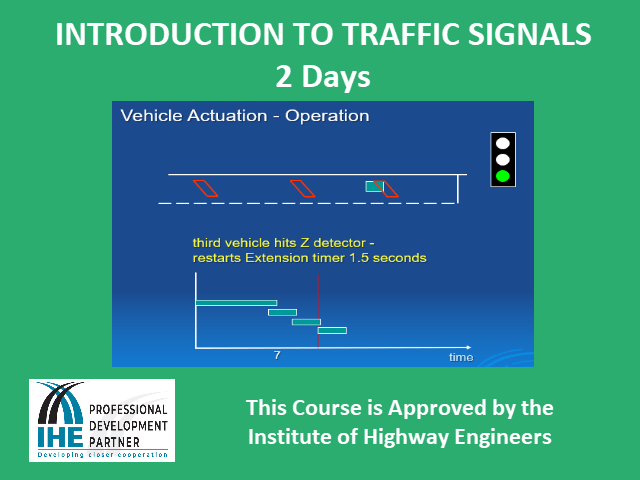
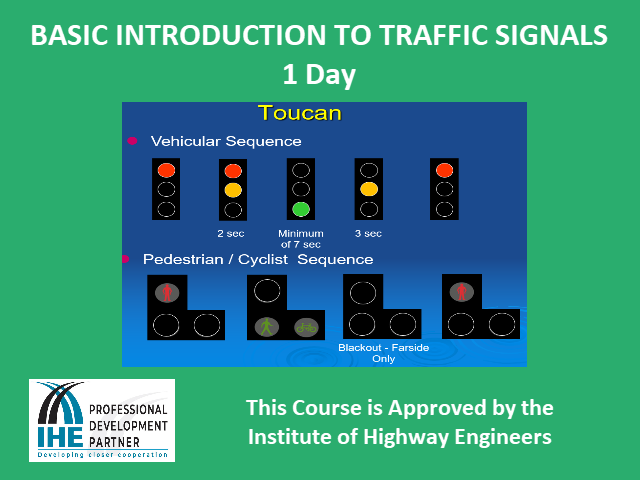
This course is suitable for anyone recent or new in the traffic signal/control field. In addition, senior managers who find that they are responsible for traffic signal control teams and their background experience hitherto has been in other specialist areas such as highway design, transportation planning etc. will find this a very useful course. The course offers an ideal preparation for virtually any of our other courses, and particularly for a LinSig course, which usually follows.   Prerequisites. The course starts from basics; hence no prior knowledge is required.   Course content. The course is aimed at providing an insight into the traffic signals field, covering a number of design related subjects at an introductory level including: Legislation & Good Practice. Traffic Signal Terminology. Pedestrian and Cyclist Traffic Provisions. How Traffic Signals Work. […]

This course is designed to provide anyone whose work involves traffic modelling with a concise grounding in the most important traffic signal concepts. The correct modelling of traffic signals is vital in any traffic model and to achieve this it is important that traffic modellers understand how traffic signals work and are designed. This course is based on our more comprehensive two day Introduction to Traffic Signals course but concentrates on subjects of most interest to traffic modellers to allow the course to be completed in one day. The course covers basic concepts and does not cover any details of how traffic signals are modelled in modelling software.

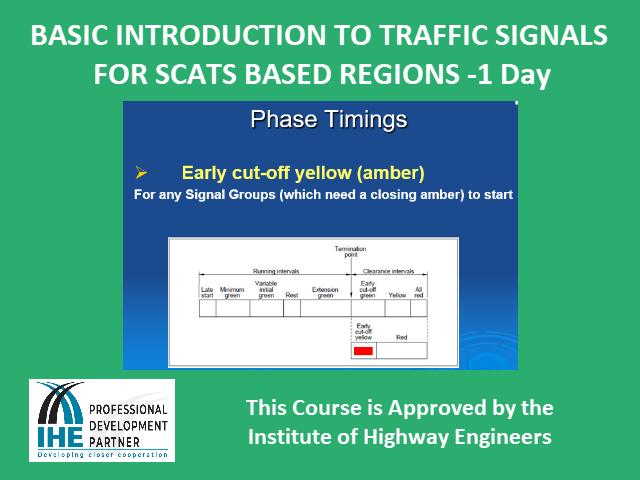
This course is designed to provide anyone whose work involves traffic modelling or traffic signal design with a basic understanding of the most important traffic signal concepts when dealing with SCATS based controllers. This course is suitable for anyone involved in traffic modelling or design and who are new to traffic signals or would like to refresh their understanding of important traffic signal concepts. It is suitable for complete beginners and no prior knowledge of traffic modelling or design of traffic signals is required. The course covers the determination of safety critical timings such as intergreens and clearnce times and looks at the both the Australian method and the method typically applied in countries like Ireland (which are different). The course is aimed at providing a good grounding in the most important traffic signal concepts which traffic modellers or designers will encounter when building or checking traffic models or starting a signal design[…]

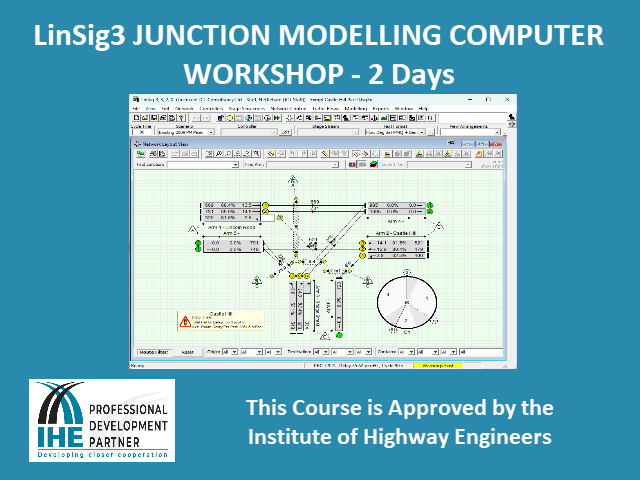
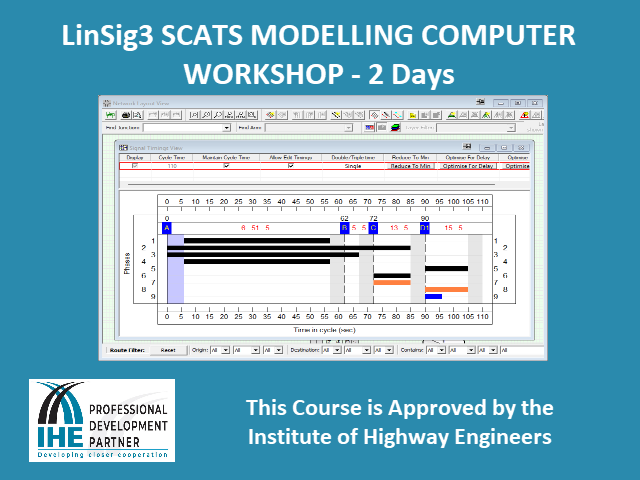
Accurate LinSig modelling is fundamental to traffic signal design, transport assessments for development and detailed studies where traffic signal junctions are a major determinant of transport outcomes. This course covers the use of LinSig 3 to model traffic signal junctions and is essential for LinSig users wishing to ensure robust and correct modelling. It starts from first principles and concentrates on the use of LinSig for modelling single junctions as well as providing a stepping stone to the LinSig Networks and Advanced features workshop. The course is computer based with practical workshop exercises being used throughout. This online course is delivered by a combination of a conference call and a remote computer lab (giving access to LinSig). You will need a good internet connection to participate but will not need to LinSig to be installed on your PC. Who should attend. This course is suitable for anyone who uses or will use LinSig for modelling traffic[…]

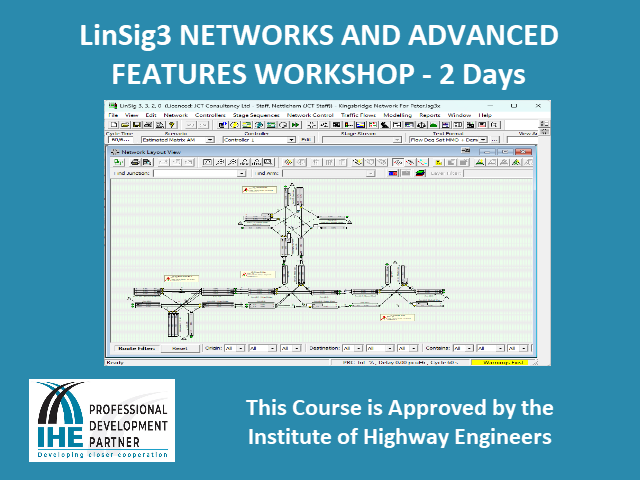
Accurate LinSig modelling is fundamental to traffic signal design, transport assessments for development and detailed studies where traffic signal junctions are a major determinant of transport outcomes. This course takes up where the LinSig 3 Junction modelling workshop finishes and covers the use of LinSig 3 to model highway networks containing traffic signal junctions, priority junctions and roundabouts. It also covers a range of more advanced LinSig features relevant to both junctions and networks. The course is computer based with practical workshop exercises being used throughout. This course is suitable for anyone who requires a more in depth knowledge of LinSig or wishes to model networks using LinSig and wishes to ensure their modelling is robust and accurate. As well as being suitable for those who have recently completed the LinSig 3 Junction Modelling Workshop it is also suitable for experienced LinSig users[…]

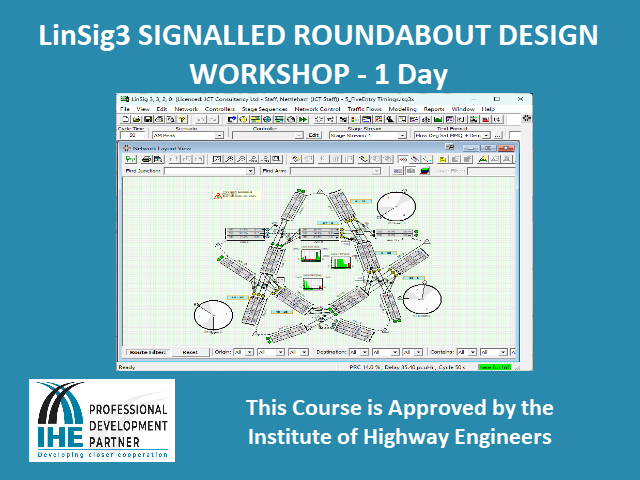
The course is aimed at all those involved in the geometric design, traffic modelling and signal optimisation of signalled roundabouts. Using a number of specialist techniques, LinSig can streamline the whole design process compared with traditional methods.   Delegates require a good understanding and hands-on experience of LinSig modelling of stand-alone junctions. This may have been gained by attending a LinSig computer workshop, or from equivalent experience in the work place.   All JCT courses are Approved or are pending Approval by the Institute of Highway Engineers and attendance is therefore recognised by the IHE and many other bodies as evidence of Continual Professional Development (CPD). Courses are managed under a ISO9001 Quality Management System.   The geometric design of signalled roundabouts requires a rigorous process of lane flow analysis to[…]

LinSig3.2 can seamlessly be switched from UK based TOPAS 2500 mode to SCATS mode. The SCATS controller model replicates SCATS Signal Groups, Phases, Clearance Times and Pedestrian Protection. SCATS mode also supports the import of flows directly from SCATS dump files with automatic data searching and aggregation. This one day supplementary course covers the use of LinSig3s key SCATS based features. The course is computer based with practical workshop exercises.   This course is suitable for anyone who is already familiar with basic LinSig modelling or who has attended the previous two day LinSig Junction Modelling course. The LinSig3 Junction Modelling course and the SCATS course run concurrently and are available as a discounted three day bundle.   Delegates are expected to have a basic understanding of LinSig modelling and of SCATS based terminology such as Signal Groups, Phases and Clearance[…]

This course would typically suit anyone who is involved with traffic signal design and would like to further their skills in this area. More information is available under 'Course Content'.   Anyone who is involved with traffic signal design and would like to consolidate and expand their experience in signal design.   Attendance of the Introduction to Traffic Signals JCT course or equivalent experience. Ideally delegates will have also previously attended a LinSig Computer Workshop however this is not totally essential.   All JCT courses are “Approved” or are pending “Approval” by the Institute of Highway Engineers and attendance is therefore recognised by the IHE and many other bodies as evidence of Continual Professional Development (CPD). Courses are managed under a ISO9001 Quality Management System.   This is a three[…]

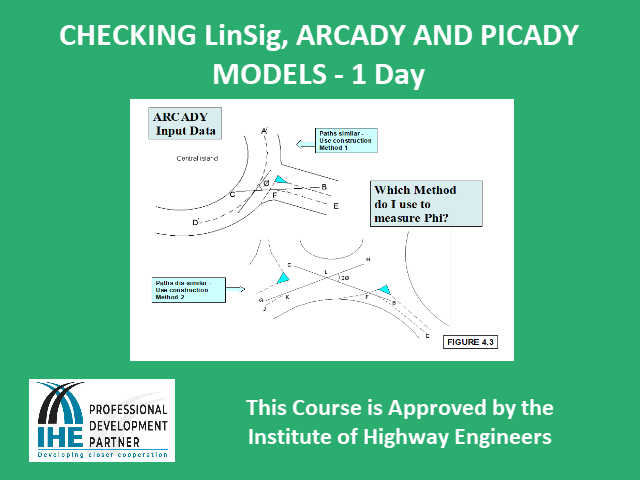
This 1-day (non-computer) course is aimed at providing practical assistance to anyone associated with a highways development control authority and/or consultants who are responsible for checking the traffic modelling content of Transport Assessments. Accordingly, the course will explain how to interpret and audit/check junction and/or network modelling work completed using LinSig, Arcady  and Picady.

Comprehensive aid-memoire notes will be provided which also include suitable audit/checklist sheets for each of these software products.

A brief introduction to data collection, trip generation and distribution will be given, but only in the context of traffic modelling inputs.


This course is suitable for anyone involved with junction related work in[…]
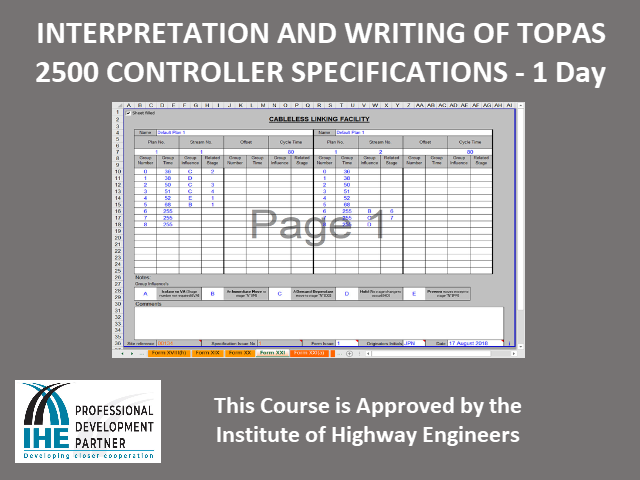
This course is a detailed examination of Controller Specification forms to allow Transport Modellers to extract accurate information for modelling and assist Traffic Signal Design Engineers in preparing Traffic Signal Controller Specifications. It is based on the TOPAS 2500 Specification (formerly TR 2500/TR2210A/MCE0141) for microprocessor traffic controllers. Using a real world example the course takes delegates through an ITS1827D document considering all the elements which make up a Specification with theory breaks covering Phase Delays, Detection, Controller Logic, UTC, VA, CLF, Call Cancel Loops, Shuttle Working, SDE/SA, Hurry Calls, Priority/Emergency Modes, Pedestrian Linking and Cross Stream Linking. Who should attend. This course will benefit both Transport Modellers and Traffic Signal Design Engineers   Prerequisites. Prior to attending the course, Delegates should have a basic understanding of traffic signal terminology[…]

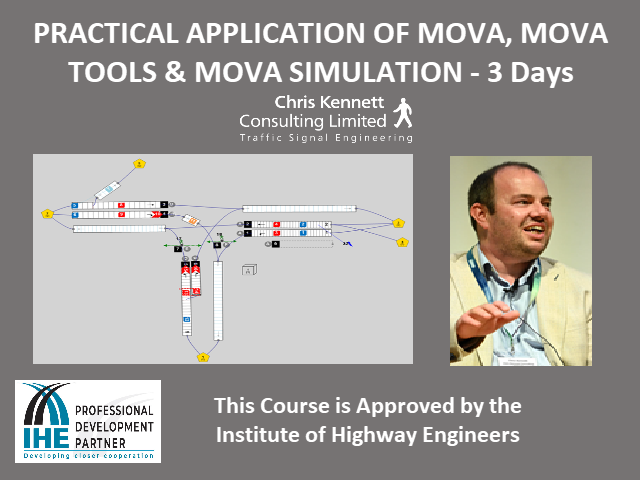
This course is designed for Traffic Signal Professionals involved in the design of Traffic Signal Installations which use Microprocessor Optimised Vehicle Actuation (MOVA) to optimise traffic signal timings. The course begins with basic theory of MOVA but moves quickly onto the practical application of MOVA including specifying detectors, building Datasets and using MOVA Tools and MOVA Simulation on laptops which are supplied. Configuring MOVA outstations and integrating MOVA with SCOOT are also covered. The course has a lectured format with workshops to consolidate the learning and comprehensive notes and training materials are provided.

Who should attend.

Attendees should have a good basic understanding of UK traffic signals including Phases, Stages, Intergreens and Interstages. These topics are covered on other JCT courses such as "An Introduction to Traffic Signals". Whilst it is not imperative to have[…]
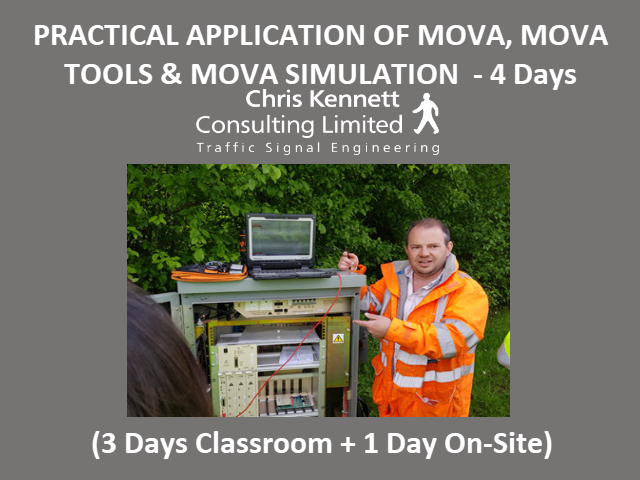
Practical Application of MOVA Computer Workshop including the use of MOVA Tools and MOVA Simulation - With Day On-Site
4 Days • In-House Course • In-Person Course

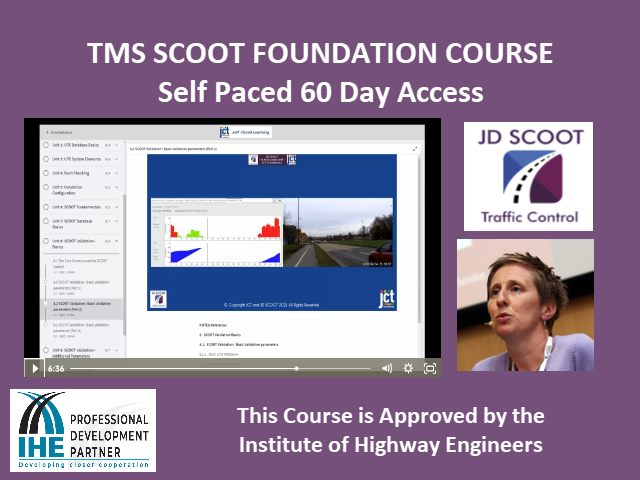
This course covers all aspects of SCOOT from first Principles through Design and Implementation and On Street Validation and Calibration. It is based on the Dynniq TMS SCOOT system. The course equates to around 3 days face to face training with around 8 hours of recorded material and 24 Exercises to put your learning into practice The course is accessed on a self-paced basis with typically 30 days access being given to the pre-recorded material and downloadable content. The course is supported with printed course material and an invitation to a live tutorial where questions be answered. Further support can be accessed via e mail.   Attendees should have a good understanding of traffic signal terminology and operation, typically gained through experience or by attending training such as the IHE Traffic Signals or JCT Introduction to Traffic Signals Courses. In addition attendees with access to a working TMS SCOOT system[…]

This course covers all aspects of SCOOT from first Principles through Design and Implementation and On Street Validation and Calibration. It is based on the Siemens UTC SCOOT system. The course equates to around 3 days face to face training with around 9 hours of recorded material and 18 Exercises to put your learning into practice The course is accessed on a self-paced basis with typically 30 days access being given to the pre-recorded material and downloadable content. The course is supported with printed course material and an invitation to a live tutorial where questions be answered. Further support can be accessed via e mail.   Attendees should have a good understanding of traffic signal terminology and operation, typically gained through experience or by attending training such as the IHE Traffic Signals or JCT Introduction to Traffic Signals Courses. In addition attendees with access to a working UTC SCOOT system[…]

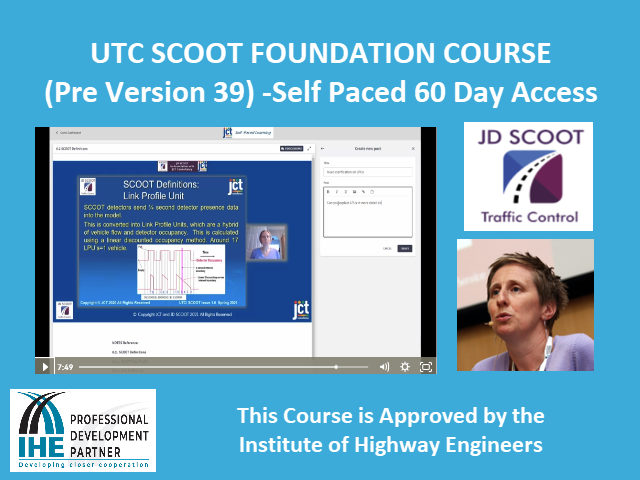
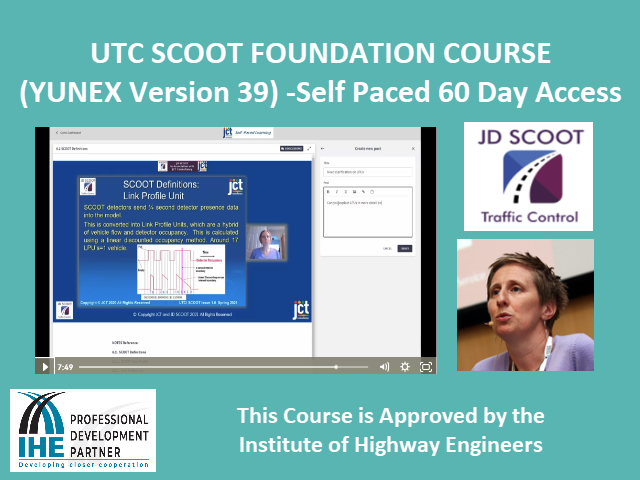
This course NEWLY UPDATED TO COVER YUNEX TRAFFIC Version 39 covers all aspects of SCOOT from first Principles through Design and Implementation and On Street Validation and Calibration. It is based on the Siemens UTC SCOOT system. Note that there are later versions of SCOOT with version 41 following version 39 and an new product UTC UX. The systems are similar in many respects but it may be worth checking with us to make sure the course meets your current needs. The course equates to around 3 days face to face training with around 9 hours of recorded material and 18 Exercises to put your learning into practice The course is accessed on a self-paced basis with typically 30 days access being given to the pre-recorded material and downloadable content. The course is supported with printed course material and an invitation to a live tutorial where questions be answered. Further support can be accessed via e mail.   Who should[…]

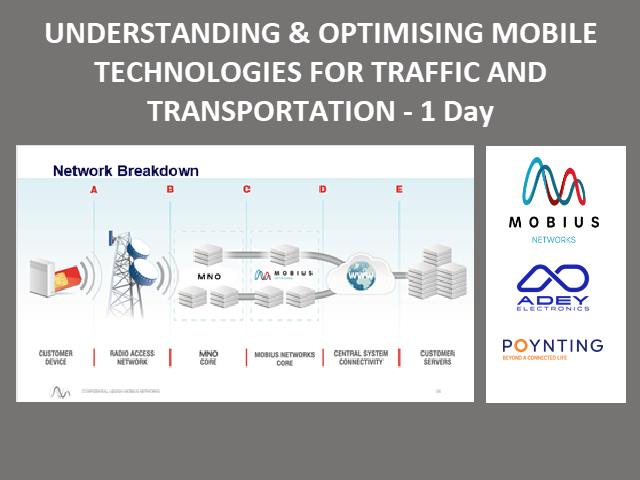
This course is delivered in association with leading experts in the Mobile Network Field:

Peter Simm & John Lyons - Mobius Networks

Lewis Harvey - Adey Electronics

Hugo Carvalho - Poynting Antenna

This expert group will comprehensively cover the use of Cellular Routers, Antennas & Survey Tools and will advise on the use of Remote Management Platforms.


This course is suitable for anyone involved in the procurement, management, installation or maintenance of Mobile Network Communications. As the course is delivered in association with JCT the target audience is people working in the Intelligent Transport / Traffic Signals / Variable Message Signs fields or anyone working in a traffic environment but others with any need for[…]

No products in the basket.